PUPPY SCHEDULES BY AGE
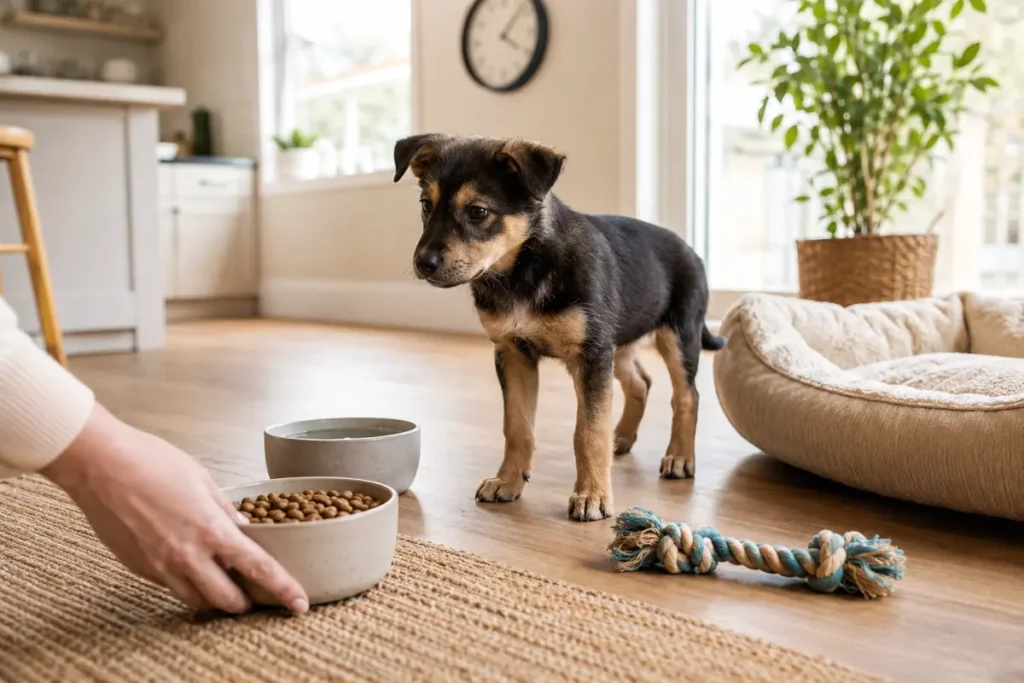
Simple daily routines for every puppy stage
These puppy schedules by age provide flexible routines for potty breaks, meals, naps, play, training, and sleep. Use them as practical starting points, then adjust each routine for your puppy’s health, energy level, and individual needs.
Feeding schedule by age
Plan meals, water, and treats without overcomplicating the day.
How to use puppy schedules by age
A puppy schedule should create predictable patterns without making every day feel rigid. VCA Animal Hospitals’ puppy guidance likewise recommends establishing a daily routine that includes exercise, play, training, feeding, and sleep. Young puppies learn best when important activities happen in a familiar order. For example, your puppy might wake up, go outside for a potty break, eat breakfast, go outside again, enjoy a few minutes of play or training, and then settle down for a nap.
The exact times can change to fit your household. What matters most is consistently giving your puppy opportunities to eat, eliminate, exercise, learn, and rest. Watch your puppy’s behavior and adjust the schedule when needed rather than expecting the puppy to follow the clock perfectly.
Take your puppy outside immediately after waking, eating, drinking, active play, and training. Another potty trip should happen before bedtime and whenever you notice sniffing, circling, wandering away, or suddenly becoming restless.
Schedule for an 8-week-old puppy
At eight weeks old, puppies need frequent potty opportunities and a great deal of sleep. Individual needs vary, so take your puppy out after every nap, meal, drinking session, and energetic play period and whenever their behavior suggests they need to eliminate.
Divide the puppy’s daily food into the number of meals recommended by your veterinarian or food manufacturer. Keep play and training sessions gentle and brief. A few minutes of learning followed by rest is usually more productive than one long session.
Young puppies may sleep for much of the day. Naps are essential for healthy development and can prevent the biting, zooming, and crankiness that often appear when a puppy becomes overtired.
Schedule for a 12-week-old puppy
A 12-week-old puppy may begin staying awake longer and showing better bladder control, but frequent supervision and potty breaks are still necessary. Continue taking the puppy outside after waking, meals, drinking, play, and training.
This is a useful stage for building simple household habits. Practice responding to the puppy’s name, coming when called, sitting, calmly entering the crate, and relaxing on a bed or mat. Keep training positive and reward the behaviors you want repeated.
Introduce new people, environments, sounds, surfaces, and safe experiences gradually. Socialization should help your puppy feel comfortable and confident, not frightened or overwhelmed.
Feeding and water routines
Serve meals at predictable times instead of leaving food available all day unless your veterinarian recommends otherwise. Scheduled meals can make appetite changes easier to notice and may help make potty timing more predictable.
Fresh water should normally remain available throughout the day. Your puppy may need additional water during warm weather, exercise, or active play. Never restrict water as a shortcut for house training without veterinary guidance.
Ask your veterinarian whether your puppy’s food, portions, meal frequency, and growth rate are appropriate. For additional veterinary context, see VCA Animal Hospitals’ overview of feeding growing puppies. Feeding needs differ according to age, expected adult size, health, activity, and the calorie content of the food.
Naps, play, and training
Balance activity with regular quiet time. Short walks or safe exploration, age-appropriate play, food puzzles, sniffing games, and brief training sessions can help meet your puppy’s physical and mental needs.
Avoid expecting a young puppy to remain active or focused for long periods. If your puppy becomes unusually mouthy, frantic, unable to listen, or difficult to settle, tiredness may be contributing to the behavior. Offer a potty break and then provide a calm, comfortable place to rest.
Adjust the routine as your puppy grows
No single schedule works for every puppy. Breed, size, temperament, health, feeding plan, household routine, and individual bladder control can all affect the day. Increase the time between potty breaks gradually and only after your puppy has been consistently successful.
Accidents are information, not misbehavior. If accidents increase, shorten the interval between outdoor trips, supervise more closely, and reward successful potty trips. Contact your veterinarian if your puppy suddenly urinates much more frequently, strains, develops persistent diarrhea or vomiting, refuses food or water, or shows another significant health or behavior change.
A useful puppy routine should support your household while meeting the puppy’s needs. Consistent patterns, patient supervision, positive training, and enough sleep will matter more than following every scheduled time perfectly.