ESSENTIAL PUPPY SUPPLIES
Essential puppy supplies that earn their place
Compare essential puppy supplies for safe rest, training, and cleanup—then buy only what solves a real need for your puppy.
READY TO COMPARE?
Go straight to our current quick picks
Each guide shows who every pick suits, why it stands out, and what to know before buying. Some links are affiliate links.
How to choose essential puppy supplies
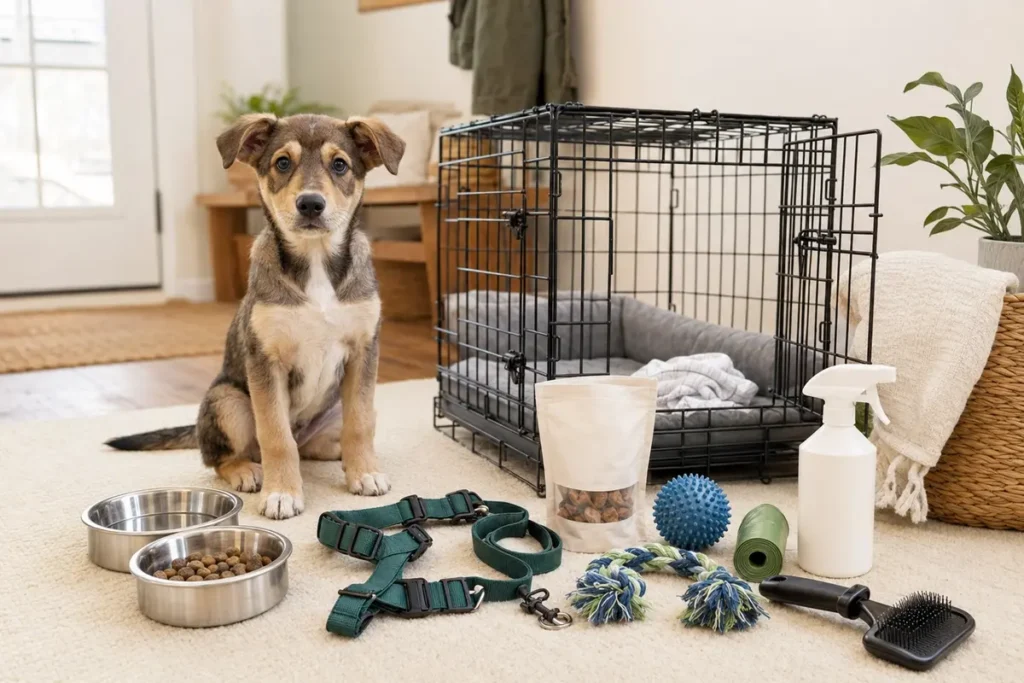
A useful puppy setup is not the longest shopping list. It is a small collection of safe, correctly sized items that solves the needs your puppy has today. Begin with sleep and confinement, food and water, identification and walking equipment, rewards, chew-safe play, grooming, and accident cleanup.
Buy slowly when size, chewing style, food tolerance, or household routine is still uncertain. Puppies grow quickly, and a product that works for one puppy may be uncomfortable, unsafe, or unnecessary for another. When possible, ask the breeder, shelter, foster family, or veterinarian what the puppy already uses successfully.
Choose the supplies you need help comparing
These focused guides explain what to look for, what to avoid, and when an item needs to be replaced.
Crates and playpens
Choose a safe setup that fits your home, your puppy, and the way you supervise.
Training treats
Select small, motivating rewards that are easy to deliver and appropriate for your puppy.
Cleanup essentials
Prepare for accidents, odors, muddy paws, washable bedding, and everyday messes.
Puppy harnesses
Compare adjustable options for padded walks, tiny puppies, precise fit, and quick daily setup.
A practical day-one checklist
Before bringing your puppy home, make sure you can meet these basic needs without improvising. You can add convenience items later.
- Safe rest and confinement: a correctly sized crate, pen, gate, or puppy-proofed room plus simple washable bedding.
- Food and water: stable, easy-to-clean bowls and the food the puppy is already eating, unless your veterinarian recommends a change.
- Identification and control: a comfortable collar or harness, identification tag, and lightweight leash that fit securely without restricting movement.
- Training and enrichment: tiny food rewards, several puppy-safe toys, and chews chosen for the puppy’s current size and chewing habits.
- Cleanup: enzymatic accident cleaner, washable towels, waste bags, and a secure place to store all cleaning products.
- Health preparation: grooming tools appropriate for the coat, a safe travel restraint, and contact details for your veterinarian and nearest emergency clinic.
Use safety, fit, and cleaning as your filters
Check every item for sharp edges, loose pieces, damaged seams, exposed stuffing, or a size that could be swallowed. Inspect collars and harnesses frequently as your puppy grows. Toys and chews require supervision until you understand how your puppy uses them, and anything cracking, fraying, or breaking into pieces should be removed.
Wash food and water bowls regularly, clean bedding according to its care instructions, and store medications, cleaners, food, batteries, cords, and other hazards behind a secure barrier. “Pet friendly” on a label does not make careless storage safe. Follow the product directions, keep the puppy away during cleaning when instructed, and ask your veterinarian about any exposure or reaction.
Spend more only where it improves the outcome
Durability, adjustability, cleanability, and a reliable fit can justify a higher price. Decorative features, large bundles, and specialized gadgets often do not. A divider crate that adapts as a puppy grows, a washable bed cover, or an adjustable harness may offer better long-term value than repeatedly replacing a poorly fitting item.
Keep receipts until you know an item fits and your puppy will use it. Avoid opening every toy, treat, and accessory on the first day. A smaller rotation makes it easier to observe preferences, identify digestive reactions, and notice which products are actually helping.
Match supplies to your puppy’s routine
Products work best when they support a predictable day. Place the crate where your puppy can rest without isolation or constant traffic, keep rewards near the areas where you practice, and store cleanup supplies where adults can reach them quickly but the puppy cannot. Build purchases around your puppy’s daily schedule and the priorities in New Puppy 101. For reward timing and practice ideas, use the puppy training guides.
Common puppy-supply questions
Should I buy everything before the puppy arrives?
Buy the day-one safety and care basics, then wait on extras. Your puppy’s adult size, preferences, chewing strength, coat, health needs, and household routine will become clearer after arrival. Delaying uncertain purchases usually saves money and reduces clutter.
How often should I check the fit of a collar or harness?
Check the fit frequently during growth spurts and every time equipment looks or feels different. Look for rubbing, hair loss, redness, pinching, slipping, damaged hardware, or changes in movement. Follow the manufacturer’s fitting instructions and ask your veterinarian if equipment appears to cause discomfort.
When should a toy or chew be replaced?
Remove it when pieces loosen, stuffing or internal parts become accessible, the item becomes small enough to swallow, or the material develops sharp or deeply damaged areas. Because chewing styles vary, direct supervision is the safest way to learn which products are appropriate for your puppy.
Sources and further reading
- VCA Animal Hospitals: How to Crate Train Your Dog
- ASPCA: What to Inspect When You’re Expecting a Puppy or Kitten
- ASPCA Animal Poison Control: Poisonous Household Products
Safety note: Product needs vary with age, size, health, and behavior. This guide is general education and does not replace advice from your veterinarian.