NEW PUPPY CARE GUIDE
Your First Weeks With a New Puppy
This new puppy care guide will help you prepare for your puppy’s arrival and confidently navigate the first few weeks at home. A simple routine, a safe environment, and small daily training wins can make the transition easier for everyone.
New Puppy Care Guide: What Your Puppy Needs on Day One
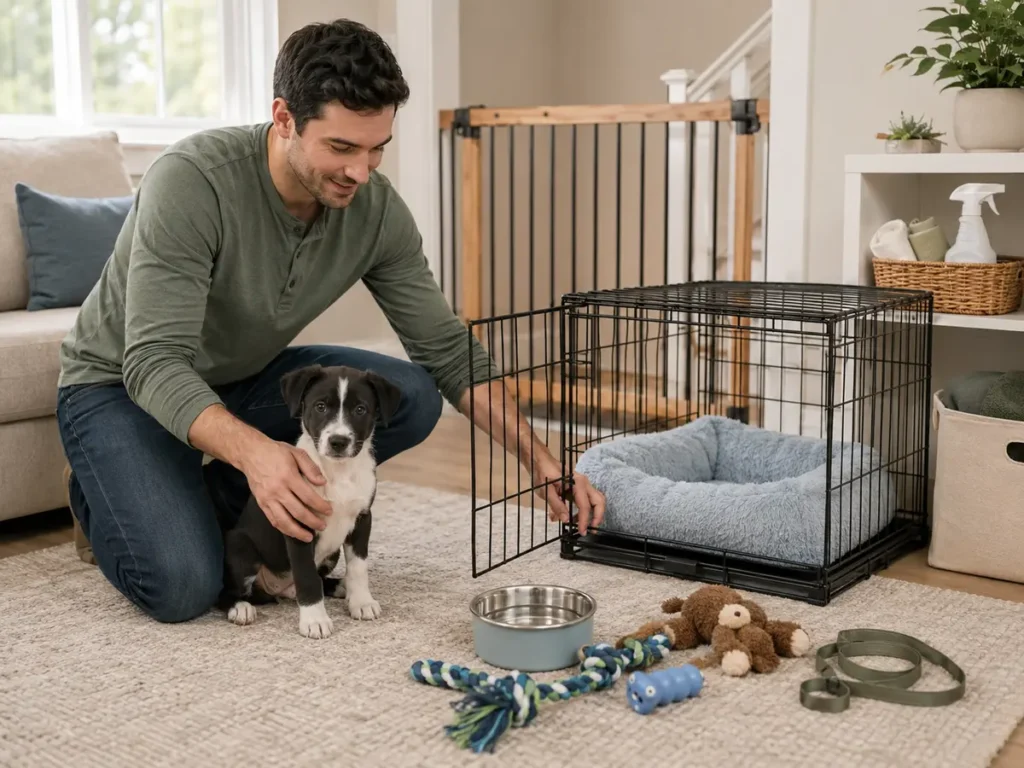
Prepare one quiet, puppy-proofed area where your puppy can eat, rest, play, and adjust without having access to the entire house.
- Properly sized crate or secure sleeping area
- Food and water bowls plus the food your puppy already eats
- Collar or harness, identification tag, and leash
- Puppy-safe chew toys and small training treats
- Enzymatic cleaner, baby gates, and washable bedding
- Veterinarian and emergency-clinic contact information
The first 24 hours at home
Keep arrival day calm. Take your puppy to the potty area first, introduce family members one at a time, and allow plenty of sleep.
- Offer water and follow the puppy’s existing meal schedule
- Take them outside after waking, eating, drinking, and playing
- Use brief, gentle play and training sessions
- Begin creating positive associations with the crate or sleeping area
- Avoid crowded outings and a house full of visitors
Build a simple first-week rhythm
Repeat a cycle of potty break, food or water, a few minutes of activity, another potty break, and rest. Predictability helps you notice your puppy’s natural schedule and reduces preventable accidents.
Take your puppy outside after waking, eating, drinking, playing, and before bedtime. Quietly praise and reward successful outdoor potty trips. Clean accidents thoroughly without scolding your puppy. Consistency and supervision are more effective than punishment.
Start training with small wins
Keep early training sessions short, positive, and easy. Practice your puppy’s name, coming when called, sitting, and calmly accepting a collar or harness. One to three minutes at a time is enough for a young puppy. Use small treats, praise, and play to reward the behavior you want repeated.
Introduce new rooms, people, sounds, surfaces, and experiences gradually. Socialization should feel safe rather than overwhelming. Avoid forcing your puppy toward anything that causes fear. Give them space, use treats, and allow them to investigate at their own pace.
Help the household stay consistent
Agree on a few simple rules before your puppy arrives. Decide which doors stay closed, where potty trips happen, which furniture is available, and what words everyone will use for common cues. Consistent expectations make learning easier and reduce frustration for both the puppy and the people caring for them.
Keep a simple written log of meals, water, potty trips, naps, and accidents during the first week. Patterns often become clear after a few days. Share the log with anyone helping with puppy care so the next potty break, meal, or rest period is not missed.
What can wait
Your puppy does not need to master every cue or meet everyone immediately. Prioritize bonding, supervision, sleep, gentle handling, name recognition, and rewarding behaviors you want repeated. Expand freedom and difficulty gradually as your puppy succeeds.
Arrange veterinary care
Schedule an initial veterinary appointment soon after bringing your puppy home. Bring any vaccination, deworming, microchip, and breeder or rescue records with you. Ask about feeding amounts, parasite prevention, vaccination timing, safe socialization, and when your puppy can visit public areas.
Contact your veterinarian promptly if your puppy repeatedly vomits, has persistent diarrhea, refuses food or water, becomes unusually weak, struggles to breathe, or shows another sudden change in behavior. Young puppies can become seriously ill quickly, so it is appropriate to call when something seems wrong.
Set up the first veterinary visit
Call a veterinary clinic before or soon after homecoming rather than waiting for a problem. Bring vaccination, deworming, microchip, feeding, and previous medical records. Your veterinarian can examine your puppy, build an individualized vaccine and parasite-prevention plan, discuss nutrition and growth, and explain which public places are appropriate while immunity is developing. Vaccine decisions depend on age, health, lifestyle, geography, and exposure risk; an online calendar cannot replace that plan.
Protect rest as carefully as play
A young puppy may switch quickly from curious to wild, mouthy, or unable to settle. That often means the day has become too difficult—not that your puppy is deliberately misbehaving. Build quiet periods into the routine, dim the activity level before naps, and give the puppy a safe place where children and other pets will not disturb sleep. Watch the puppy in front of you rather than trying to force an exact online schedule.
Introduce the household one step at a time
Keep early greetings calm and optional. Let your puppy approach, provide an easy retreat, and supervise every interaction with children and resident animals. Separate food bowls, chews, beds, and high-value items at first. If either animal stiffens, hides, stares, guards, or repeatedly tries to leave, create distance. Slow introductions are easier to repair than a frightening first meeting.
Keep a simple puppy log
For the first week, record meals, water, urination, bowel movements, naps, medication, and anything unusual. A log reveals the puppy’s natural rhythm and gives your veterinarian useful facts if appetite, stool, energy, or urination changes. Also note small wins: resting in the new space, responding to a name, choosing a toy, or eliminating outdoors. Those are meaningful signs that your puppy is beginning to feel secure.
The simple takeaway
A safe space, frequent potty opportunities, adequate sleep, and a predictable routine matter more than a perfect first week.
Health and safety note: This guide is educational and is not a substitute for advice from your veterinarian or a qualified reward-based trainer. Contact your veterinarian promptly about illness, injury, pain, ingestion of a hazardous item, or a sudden behavior change.
Sources and further reading
We checked the safety-sensitive guidance in this article against the following veterinary and animal-welfare resources. Links open the original source so you can verify the information and discuss it with your veterinarian.