PUPPY FIRST YEAR GUIDE
A puppy first year guide to key milestones
Follow socialization, teething, enrichment, and changing routines with practical guidance for each stage of your puppy’s first year.
Puppy First Year Socialization Checklist
Build positive experiences without overwhelming your puppy.
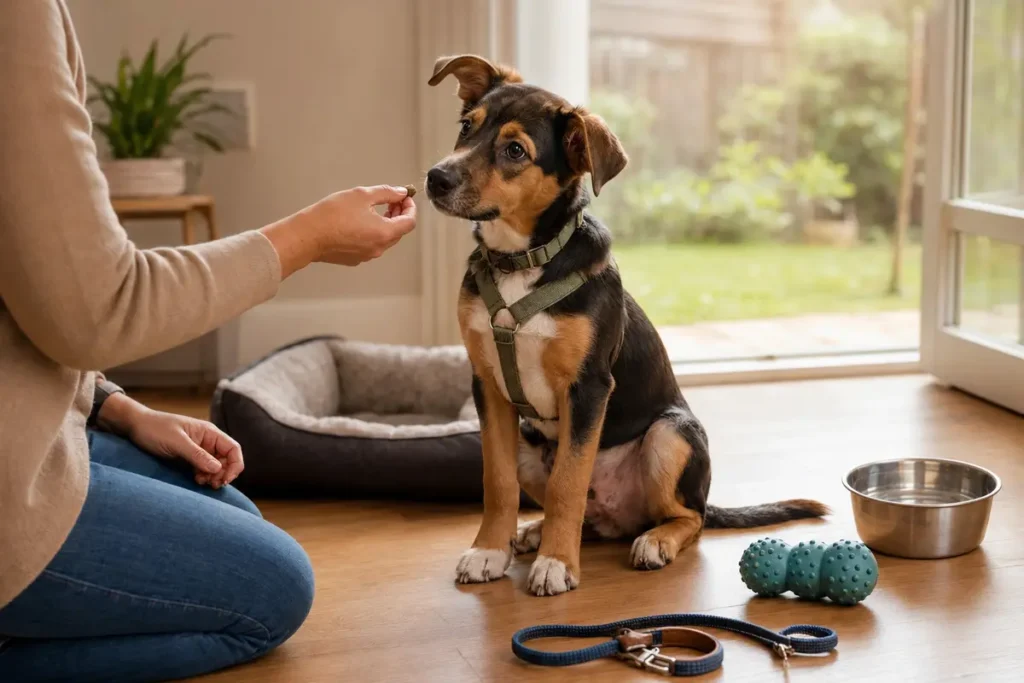
Puppy First Year Guide: What to Expect
Your puppy’s first year brings rapid physical, emotional, and behavioral changes. Early socialization, teething, changing sleep patterns, growing independence, and new training challenges may appear at different stages. Use this puppy first year guide to understand what is typical, support healthy development, and adjust routines as your puppy matures.
Puppy Development Stages at a Glance
Development does not follow an exact calendar. Breed, adult size, health, history, and individual temperament all affect the pace. The age ranges below are useful guideposts, not deadlines. If you notice sudden behavior changes, pain, appetite loss, or anything that concerns you, contact your veterinarian.
8–12 weeks: settling in
Focus on safety, bonding, sleep, frequent potty trips, gentle handling, and short positive introductions to everyday sights and sounds. Keep training sessions brief and reward the behaviors you want to see again.
3–6 months: learning fast
Teething intensifies, curiosity grows, and routines begin to feel familiar. Continue socialization at your puppy’s pace, provide safe chewing choices, practice calm alone time, and build reliable responses to their name and simple cues.
6–9 months: adolescence begins
Your puppy may test boundaries or seem to forget familiar skills. This is normal adolescent behavior, not stubbornness. Return to easier practice, manage tempting situations, reward check-ins, and provide appropriate physical and mental activity.
9–12 months: growing maturity
Many puppies look nearly grown while their impulse control is still developing. Maintain consistent household rules, reinforce calm behavior, adapt exercise to your veterinarian’s guidance, and keep training rewarding and relevant to daily life.
Five Priorities That Matter All Year
- Prevent problems with management. Gates, pens, leashes, safe storage, and planned rest make good choices easier while habits are forming.
- Protect sleep and recovery. Overtired puppies often become mouthy, restless, or unable to focus. Schedule quiet time as intentionally as play and training.
- Reward everyday behavior. Notice calm settling, four paws on the floor, voluntary attention, and polite choices instead of waiting for mistakes.
- Continue positive socialization. Safe exposure is about quality, not meeting everyone. Give your puppy distance, choice, and treats when exploring something new.
- Adjust as your puppy grows. Revisit meal amounts, equipment fit, enrichment difficulty, exercise, and household routines throughout the year.
Build a Routine That Can Change
A useful routine creates predictability without forcing every day into the same minute-by-minute schedule. Anchor the day around potty breaks, meals, naps, short training sessions, play, and calm connection. As bladder control, energy, and attention improve, gradually extend the time between breaks and introduce new challenges. For age-based examples, visit the puppy schedules guide. If biting, crate stress, or potty accidents are your main concern, start with the puppy training guides.
When to Ask for Professional Help
Early support can prevent small concerns from becoming established patterns. Speak with your veterinarian about health, nutrition, pain, growth, or sudden changes. For training and behavior, choose a qualified reward-based professional when you see persistent fear, guarding, escalating reactivity, separation distress, or behavior that puts a person or animal at risk. Getting help is responsible puppy care, not a sign that you have failed.
Sources and further reading
- American Veterinary Society of Animal Behavior: Puppy Socialization Position Statement
- American Animal Hospital Association: Canine Life Stage Guidelines