NEW PUPPY FIRST WEEKS GUIDE
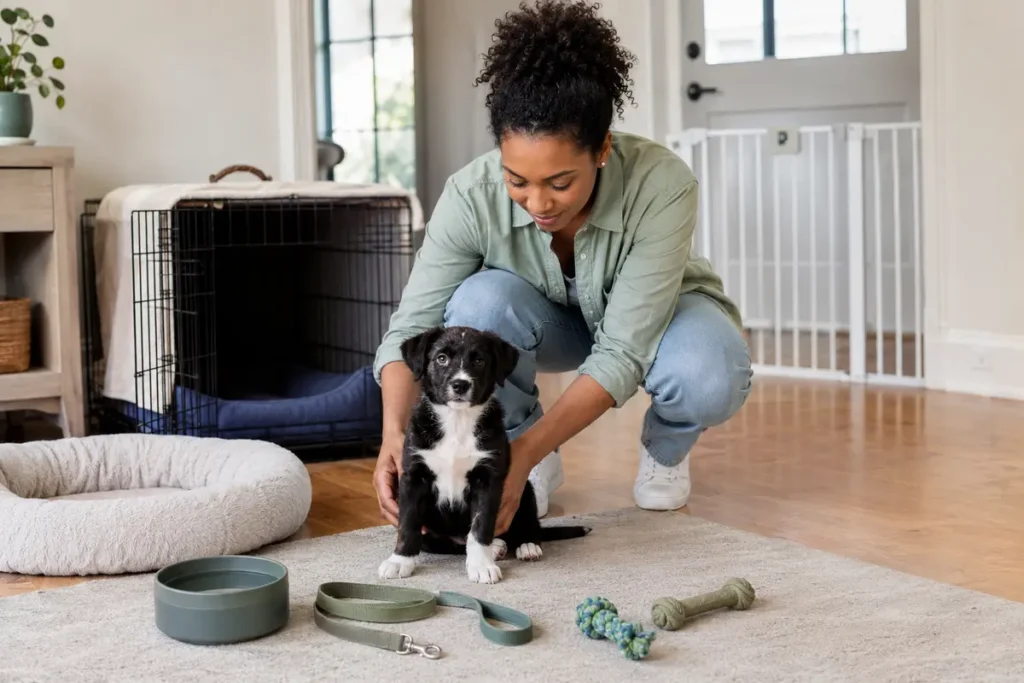
Start your puppy journey with confidence.
This new puppy first weeks guide brings together the practical information you need before homecoming and throughout those important early weeks.
New puppy care guide
The essential first-day checklist and a calm plan for the first weeks.
Your puppy’s first night
A realistic bedtime plan and approach to overnight potty breaks.
Puppy-proof your home
A room-by-room safety check before curious paws begin exploring.
New Puppy First Weeks Guide: Begin With the Essentials
Bringing home a puppy is exciting, but it can also feel overwhelming. You may be thinking about food, sleeping arrangements, potty training, veterinary care, household safety, and dozens of supplies at the same time. The goal is not to make every detail perfect before your puppy arrives. Focus first on creating a safe environment, establishing a predictable routine, and helping your puppy feel secure.
Prepare a comfortable sleeping area, food and water bowls, an appropriate puppy food, a collar or harness, a leash, identification, safe toys, cleaning supplies, and any recommended crate or confinement equipment. Ask your veterinarian or the puppy’s breeder or rescue organization about the food currently being served so dietary changes can be made gradually.
For walking equipment, compare our fit-first puppy-harness picks before choosing a size; puppies grow quickly, so recheck the fit often.
Prepare your home before arrival
Puppies explore with their mouths, so examine every room from their level. Secure electrical cords, medications, cleaning products, small objects, trash, houseplants, and anything fragile or valuable. Use gates or closed doors to limit access until your puppy learns the household rules. Check unfamiliar plants against the ASPCA’s toxic and non-toxic plant database.
Choose one manageable area where you can supervise your puppy closely. A smaller puppy-safe space makes it easier to prevent chewing and potty accidents while helping your puppy settle into the new environment. Expand access gradually as reliable habits develop.
Check fences, gates, balconies, stairs, pools, and outdoor areas for hazards. Make sure every household member understands which doors and gates must remain closed.
Plan the first night
Your puppy’s first night may include crying, restlessness, and several potty trips. This is normal. Your puppy has suddenly left familiar surroundings and needs time to adjust.
Place the puppy’s sleeping area close enough that you can hear signs of restlessness. Keep nighttime potty trips quiet and uneventful. Take your puppy to the designated area, allow time to eliminate, offer calm praise, and return indoors without beginning an exciting play session.
Avoid expecting a young puppy to sleep through the entire night immediately. Bladder control develops gradually, and individual puppies progress at different rates.
Establish a predictable routine
A simple daily rhythm helps your puppy learn what happens next. Begin with regular meals, frequent potty breaks, short play periods, brief training sessions, and plenty of naps.
Take your puppy outside after waking, eating, drinking, playing, and training, as well as before bedtime. Watch for sniffing, circling, wandering away, or sudden restlessness. These behaviors may indicate that another potty trip is needed.
Accidents are part of the learning process. Clean them thoroughly and avoid punishment. Consistent supervision, frequent outdoor opportunities, and immediate rewards for successful potty trips are more effective.
Keep early training short and positive
Begin with useful skills such as responding to a name, coming when called, sitting, calmly wearing a collar or harness, and settling in a crate or bed. Training sessions can last only one to three minutes. Several small successes throughout the day are often more productive than one long lesson.
Reward the behaviors you want repeated with treats, praise, play, or access to something your puppy enjoys. If your puppy becomes distracted, frustrated, or overly excited, pause and try again later.
Introduce people, sounds, surfaces, handling, and new environments gradually. Socialization should help your puppy build confidence without becoming frightened or overwhelmed.
Arrange veterinary care
Schedule an initial veterinary appointment soon after your puppy comes home. The American Veterinary Medical Association recommends arranging a veterinary examination as soon as possible after bringing home a new dog. Bring all available vaccination, deworming, microchip, and health records. Ask about feeding, parasite prevention, vaccination timing, safe socialization, and any breed-specific health considerations.
Contact your veterinarian promptly if your puppy repeatedly vomits, has persistent diarrhea, refuses food or water, becomes unusually weak, struggles to breathe, or experiences another sudden health or behavior change.
Your puppy does not need a flawless first week. A safe home, realistic expectations, patient supervision, and consistent routines provide a strong beginning. Use this guide to choose the topic you need now, then return as your puppy reaches each new stage.